
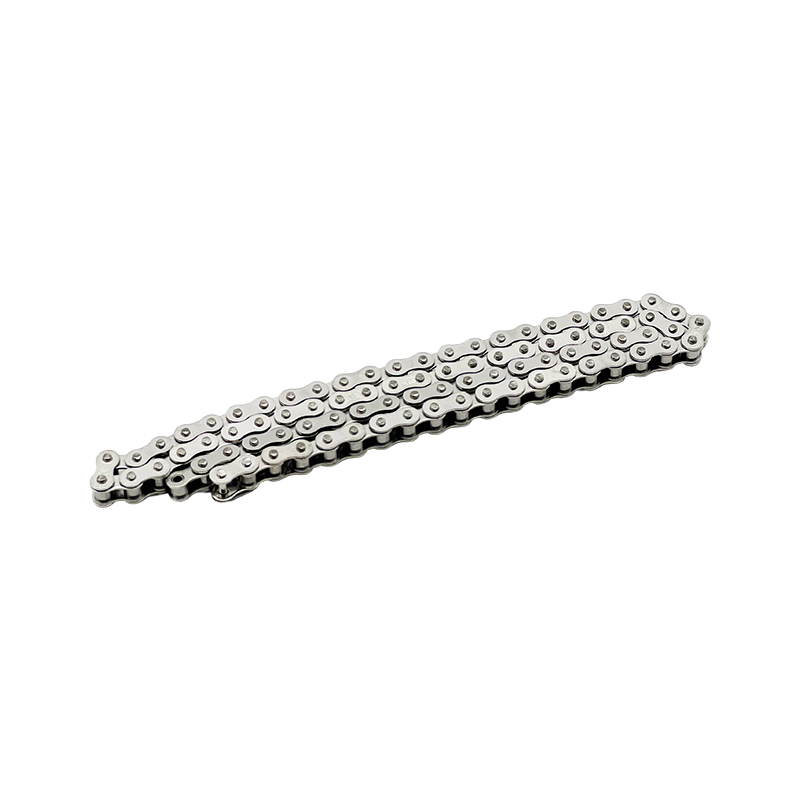
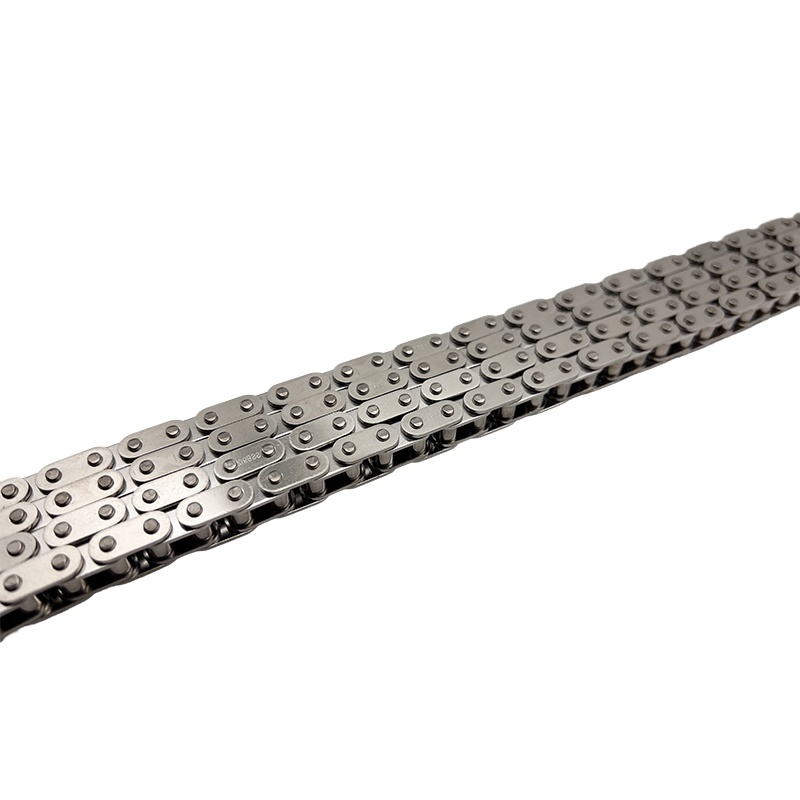
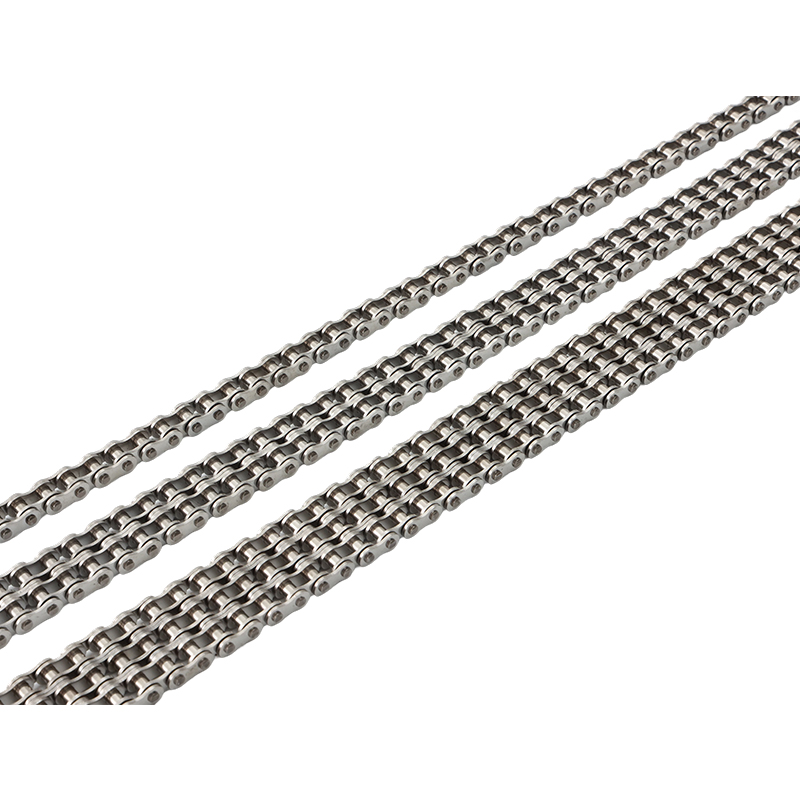
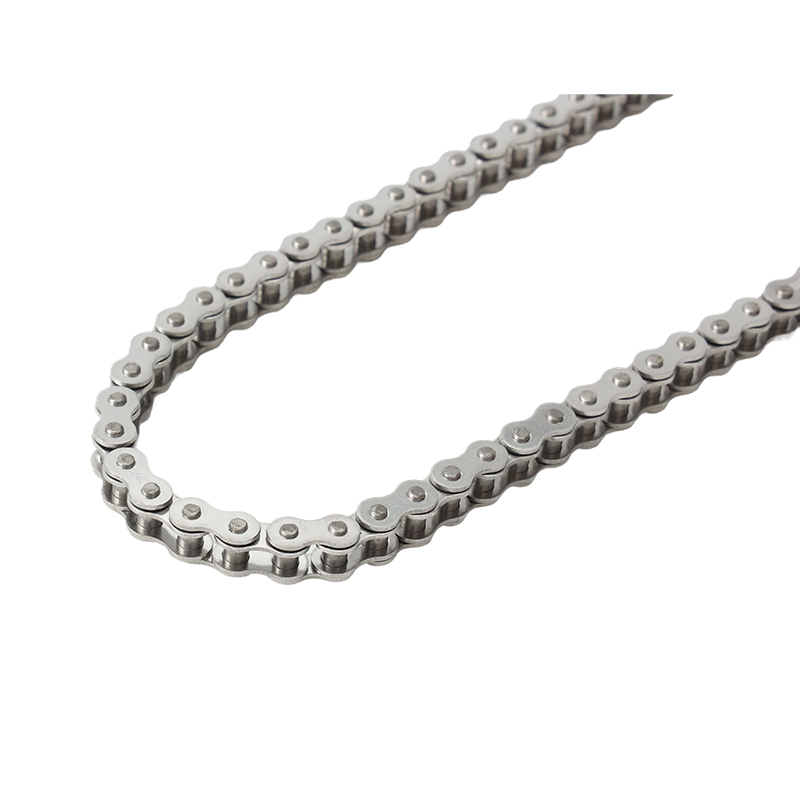


How can stainless steel industrial chains achieve a perfect balance between "rust resistance" and "strength and toughness" in corrosive environments?
Release Time : 2026-01-06
In harsh working conditions such as food processing, chemical production, marine engineering, pharmaceutical equipment, and wastewater treatment, traditional carbon steel chains often fail rapidly due to rust, wear, or chemical corrosion, leading to frequent downtime, high maintenance costs, and even the risk of product contamination. Stainless steel industrial chains, with their unique material advantages and precision manufacturing processes, successfully achieve the dual goals of "rust resistance" and "strength and toughness" in highly corrosive environments, becoming the preferred choice for high-reliability transmission systems.
1. Alloy Composition Design: Building a Corrosion-Resistant Barrier from the Source
The core of stainless steel industrial chains lies in their material—typically using austenitic stainless steel of 304, 316, or higher specifications. 316 stainless steel, with the addition of 2%~3% molybdenum, significantly improves resistance to pitting and crevice corrosion in chloride, acidic media, and salt spray environments, making it particularly suitable for coastal factories, seawater desalination equipment, or food production lines containing halogenated cleaning agents. A chromium content exceeding 16% allows for the spontaneous formation of a dense and stable Cr₂O₃ passivation film on the surface, effectively isolating it from oxygen, moisture, and corrosive media. This self-healing oxide film is the fundamental guarantee of its "stainless" properties.
2. Heat Treatment and Cold Working: Enhancing Mechanical Strength While Maintaining Corrosion Resistance
People often mistakenly believe that stainless steel is "soft" and unable to withstand high loads. In fact, through scientific cold working processes, the tensile strength and fatigue life of the chain can be significantly improved without compromising corrosion resistance. For example, after cold working, the tensile strength of a standard 304 stainless steel chain can increase from 520MPa to over 800MPa, approaching the level of some carbon steels. Simultaneously, strict control of solution treatment temperature and duration ensures complete dissolution of carbides, avoiding the risk of intergranular corrosion. This allows the chain to maintain excellent corrosion resistance while possessing sufficient toughness and impact resistance, enabling it to handle heavy-load, frequently starting and stopping transmission tasks.
3. Precision Manufacturing Process: Ensuring Structural Integrity and Operational Reliability
Stainless steel is a high-hardness material with significant processing challenges, placing higher demands on molds and processes. High-quality stainless steel industrial chains utilize a high-precision integrated production line for stamping, tube rolling, and pin press-fitting, ensuring smooth inner holes in chain links, tight pin fit, and pitch error controlled within ±0.1%. This high precision not only reduces vibration and noise during operation but also prevents accelerated localized corrosion caused by fretting wear. Furthermore, critical parts such as the edges of the chain plates undergo deburring and chamfering to eliminate stress concentration points, further enhancing the synergistic performance of fatigue and corrosion resistance.
4. Surface Treatment and Lubrication Optimization: Extending Service Life
Although stainless steel is inherently corrosion-resistant, wear or slight rust may still occur under prolonged immersion or dry friction conditions. Therefore, high-end products often undergo electrolytic polishing or passivation treatment, which not only improves aesthetics but also reduces dirt adhesion and facilitates cleaning. Some models also integrate solid lubrication coatings or employ self-lubricating pin sleeve designs, maintaining smooth operation even in oil-free or low-oil environments and preventing coupling damage from lubrication failure and corrosion.
5. Life Cycle Value: From "Available" to "Reliable"
While the initial cost of stainless steel industrial chains is higher than that of carbon steel, their exceptionally long service life in corrosive environments, zero rust contamination, and low maintenance frequency significantly reduce their life cycle cost. In the food and beverage industry, it prevents rust contamination of products; in chemical plants, it reduces production losses due to chain breakage; and on offshore platforms, it eliminates the risks of frequent replacements during high-altitude operations. This "one-time investment, long-term peace of mind" characteristic is the ultimate embodiment of its "toughness" value.
Stainless steel industrial chains are not simply "replacing" ordinary chains with stainless steel; rather, they are the result of a deep integration of materials science, metallurgical processes, and mechanical design. Using alloy composition as a shield, cold working strengthening as a spear, and precision manufacturing as a backbone, it forges a reliable path that is neither rust-free nor lacking in strength amidst the harshness of corrosion. In an era where green and intelligent manufacturing coexist, this transmission component, combining durability, safety, and sustainability, is becoming an indispensable "invisible backbone" of high-end industrial equipment.
1. Alloy Composition Design: Building a Corrosion-Resistant Barrier from the Source
The core of stainless steel industrial chains lies in their material—typically using austenitic stainless steel of 304, 316, or higher specifications. 316 stainless steel, with the addition of 2%~3% molybdenum, significantly improves resistance to pitting and crevice corrosion in chloride, acidic media, and salt spray environments, making it particularly suitable for coastal factories, seawater desalination equipment, or food production lines containing halogenated cleaning agents. A chromium content exceeding 16% allows for the spontaneous formation of a dense and stable Cr₂O₃ passivation film on the surface, effectively isolating it from oxygen, moisture, and corrosive media. This self-healing oxide film is the fundamental guarantee of its "stainless" properties.
2. Heat Treatment and Cold Working: Enhancing Mechanical Strength While Maintaining Corrosion Resistance
People often mistakenly believe that stainless steel is "soft" and unable to withstand high loads. In fact, through scientific cold working processes, the tensile strength and fatigue life of the chain can be significantly improved without compromising corrosion resistance. For example, after cold working, the tensile strength of a standard 304 stainless steel chain can increase from 520MPa to over 800MPa, approaching the level of some carbon steels. Simultaneously, strict control of solution treatment temperature and duration ensures complete dissolution of carbides, avoiding the risk of intergranular corrosion. This allows the chain to maintain excellent corrosion resistance while possessing sufficient toughness and impact resistance, enabling it to handle heavy-load, frequently starting and stopping transmission tasks.
3. Precision Manufacturing Process: Ensuring Structural Integrity and Operational Reliability
Stainless steel is a high-hardness material with significant processing challenges, placing higher demands on molds and processes. High-quality stainless steel industrial chains utilize a high-precision integrated production line for stamping, tube rolling, and pin press-fitting, ensuring smooth inner holes in chain links, tight pin fit, and pitch error controlled within ±0.1%. This high precision not only reduces vibration and noise during operation but also prevents accelerated localized corrosion caused by fretting wear. Furthermore, critical parts such as the edges of the chain plates undergo deburring and chamfering to eliminate stress concentration points, further enhancing the synergistic performance of fatigue and corrosion resistance.
4. Surface Treatment and Lubrication Optimization: Extending Service Life
Although stainless steel is inherently corrosion-resistant, wear or slight rust may still occur under prolonged immersion or dry friction conditions. Therefore, high-end products often undergo electrolytic polishing or passivation treatment, which not only improves aesthetics but also reduces dirt adhesion and facilitates cleaning. Some models also integrate solid lubrication coatings or employ self-lubricating pin sleeve designs, maintaining smooth operation even in oil-free or low-oil environments and preventing coupling damage from lubrication failure and corrosion.
5. Life Cycle Value: From "Available" to "Reliable"
While the initial cost of stainless steel industrial chains is higher than that of carbon steel, their exceptionally long service life in corrosive environments, zero rust contamination, and low maintenance frequency significantly reduce their life cycle cost. In the food and beverage industry, it prevents rust contamination of products; in chemical plants, it reduces production losses due to chain breakage; and on offshore platforms, it eliminates the risks of frequent replacements during high-altitude operations. This "one-time investment, long-term peace of mind" characteristic is the ultimate embodiment of its "toughness" value.
Stainless steel industrial chains are not simply "replacing" ordinary chains with stainless steel; rather, they are the result of a deep integration of materials science, metallurgical processes, and mechanical design. Using alloy composition as a shield, cold working strengthening as a spear, and precision manufacturing as a backbone, it forges a reliable path that is neither rust-free nor lacking in strength amidst the harshness of corrosion. In an era where green and intelligent manufacturing coexist, this transmission component, combining durability, safety, and sustainability, is becoming an indispensable "invisible backbone" of high-end industrial equipment.