
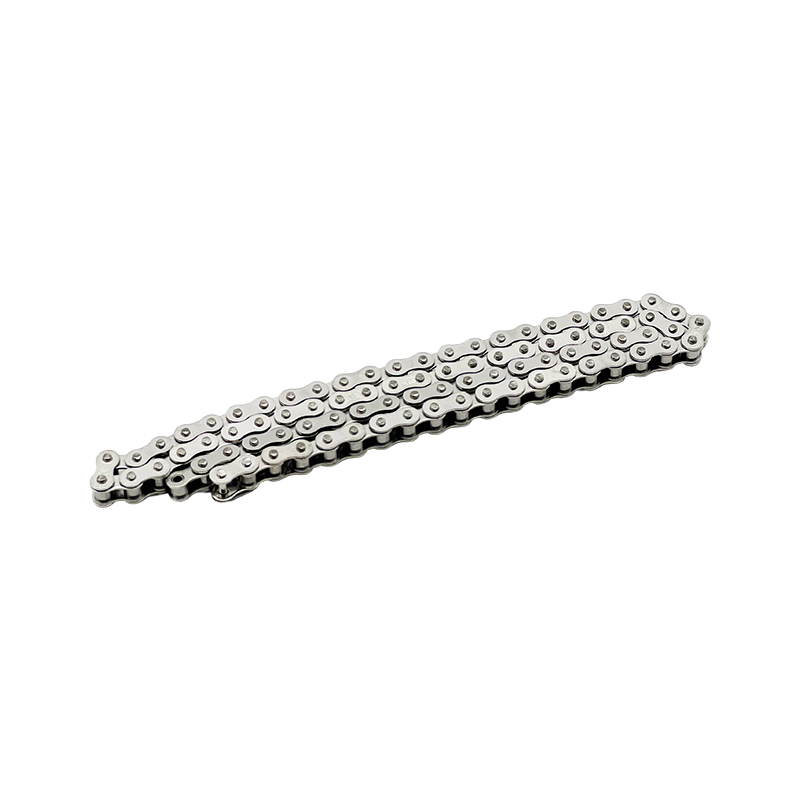
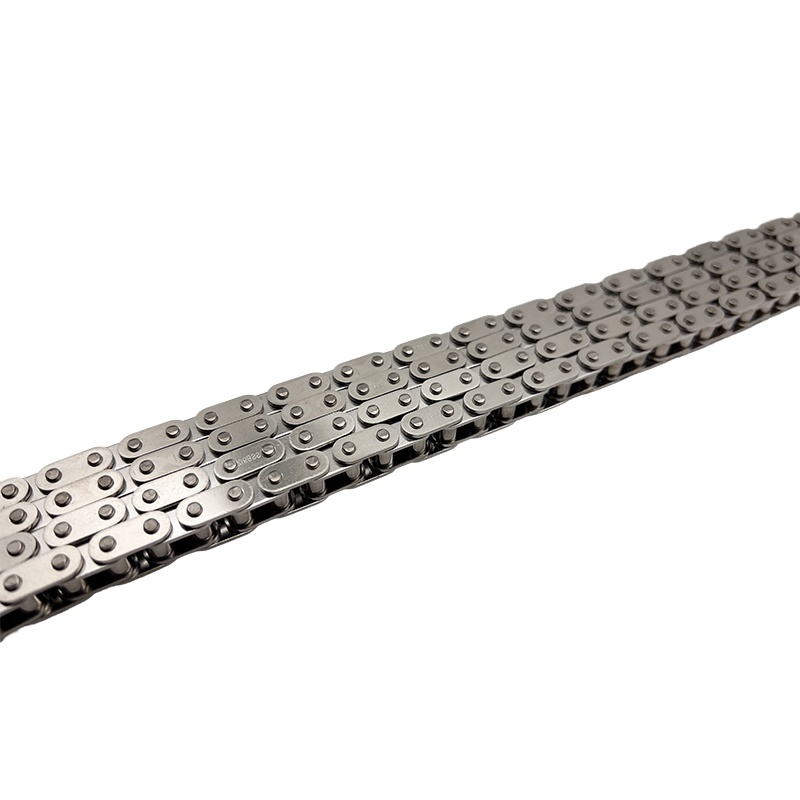
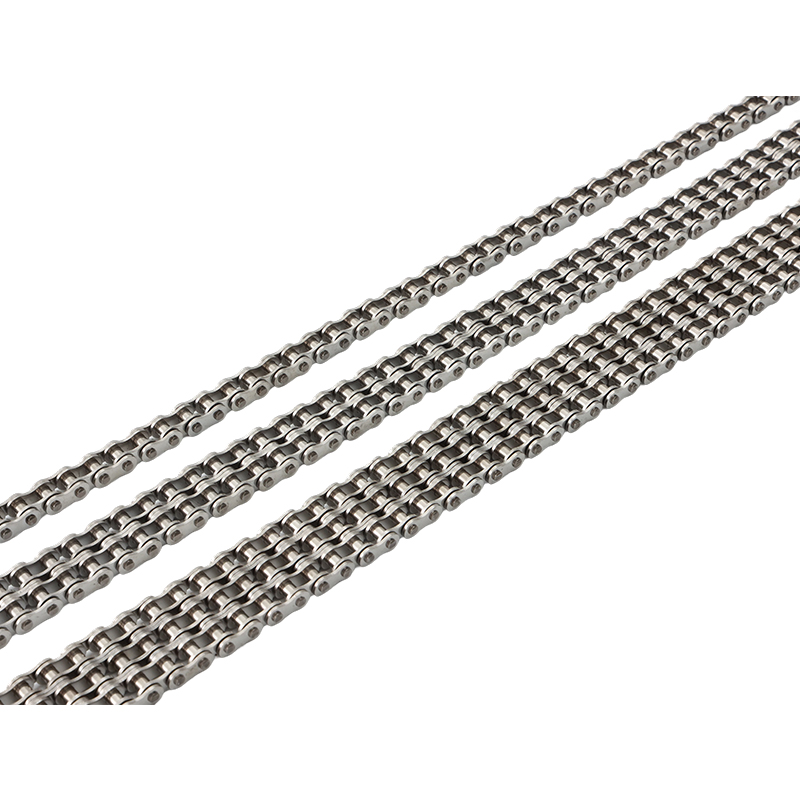
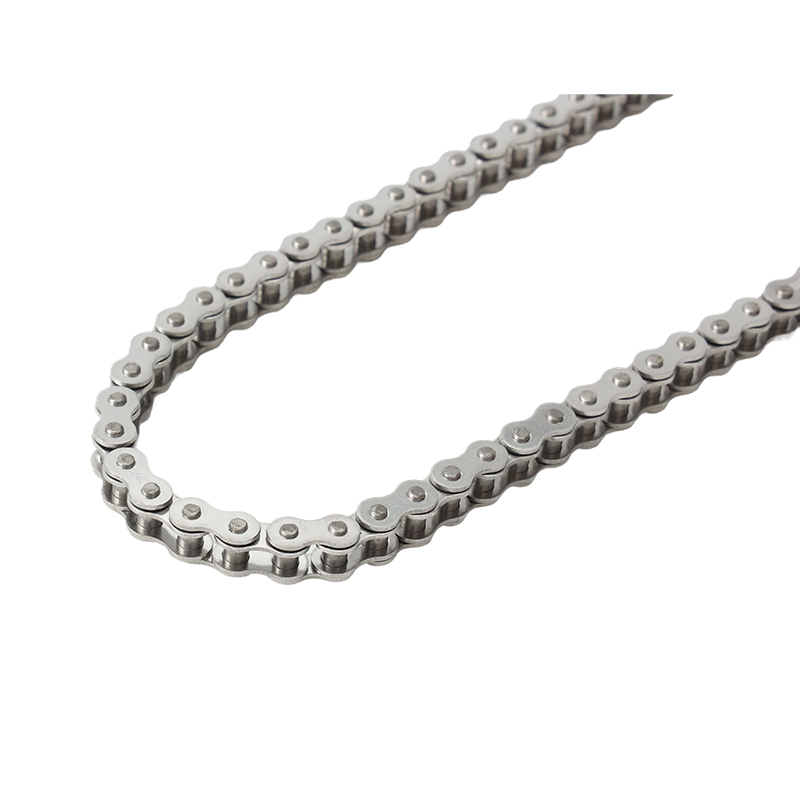


How does pre-stretching treatment of stainless steel 304 transmission chain improve slack?
Release Time : 2025-12-18
During long-term operation, stainless steel 304 transmission chains, subjected to continuous tensile loads, gradually experience stress relaxation within the metal material. This relaxation manifests as minute permanent deformation under constant stress, leading to increased pitch and decreased tension, which in turn can cause vibration, noise, and even transmission failure. Pre-stretching, a key process, can significantly improve this phenomenon by actively intervening in the stress distribution within the material. Its mechanism can be analyzed from three levels: microstructure optimization, residual stress release, and macroscopic performance improvement.
From a microstructure perspective, the crystal structure of 304 stainless steel undergoes dynamic adjustment during pre-stretching. Under tensile force, metal grains slip along the direction of force, increasing dislocation density and rearranging to form a denser dislocation network. This structural change reduces the internal energy of the material, reaching a new equilibrium state. When the stainless steel 304 transmission chain subsequently bears working loads, the dense dislocation structure formed by pre-stretching can more evenly distribute stress, avoiding rapid relaxation caused by localized stress concentration. For example, in simulated operating condition tests, the pre-stretched stainless steel 304 transmission chain exhibited less grain deformation under the same load compared to the untreated sample, indicating a more uniform stress distribution.
Residual stress release is another core mechanism by which pre-stretching improves relaxation. During cold working (such as chain link stamping and welding), uneven plastic deformation in 304 stainless steel creates residual tensile stress within the material. This stress, combined with the working load, accelerates the stress relaxation process. Pre-stretching, by applying elastic deformation exceeding the working load, partially cancels out the residual stress within the material with the applied stress, and may even generate a compressive stress zone. The presence of compressive stress effectively inhibits crack initiation and propagation, delaying permanent deformation caused by relaxation. In a real-world example, a mining equipment manufacturer, after pre-stretching a stainless steel 304 transmission chain, experienced a reduction in residual stress levels, and no exacerbation of relaxation due to stress corrosion was observed in salt spray corrosion tests.
At the macroscopic performance level, pre-stretching directly enhances the relaxation resistance of the stainless steel 304 transmission chain. Pre-stretched stainless steel 304 transmission chains exhibit optimized elastic modulus and yield strength, maintaining a more stable elastic deformation range under working loads. This means that under the same tension, pre-stretched stainless steel 304 transmission chains exhibit smaller pitch variations and significantly reduced relaxation rates. Furthermore, pre-stretching improves the fatigue life of stainless steel 304 transmission chains. In repeated load-unload cycles, the reduced stress fluctuation amplitude from pre-stretching treatment slows the accumulation rate of material fatigue damage. Comparative experiments conducted by an automotive parts supplier showed that the relaxation amount of pre-stretched stainless steel 304 transmission chains after one million cycles was only a fraction of that of untreated samples, validating its durability advantages.
Precise control of pre-stretching process parameters is crucial for the improvement effect. The stretching amount needs to be determined comprehensively based on the specifications of the stainless steel 304 transmission chain, material properties, and working conditions. Insufficient stretching results in incomplete residual stress release and limited improvement; excessive stretching may cause the material to enter the plastic deformation stage, leading to permanent deformation or strength reduction. Temperature and loading rate also affect the treatment effect. Low temperatures may inhibit dislocation movement, necessitating an appropriately higher stretching temperature; rapid loading can lead to uneven stress distribution, requiring graded loading or constant-rate stretching processes.
In practical applications, pre-stretching treatment needs to form a closed loop with the design, manufacturing, and maintenance of the stainless steel 304 transmission chain. For example, during the link design phase, stress concentration can be reduced by optimizing the cross-sectional shape (e.g., increasing the fillet radius); during manufacturing, residual stress can be further eliminated through heat treatment (e.g., solution treatment); and during use, regular monitoring and timely adjustment of tension can extend the duration of the pre-stretching effect. A wind turbine manufacturer has extended the maintenance cycle and reduced downtime losses of its stainless steel 304 transmission chain by integrating pre-stretching technology with an intelligent tensioning system.
Pre-stretching treatment has a multi-dimensional and profound effect on improving the relaxation of the stainless steel 304 transmission chain. From microstructural densification to residual stress control and macroscopic performance improvement, this process actively intervenes in the internal stress state of the material, providing a reliable guarantee for the stable operation of the stainless steel 304 transmission chain under complex operating conditions. As industrial equipment develops towards higher precision and longer lifespan, the application value of pre-stretching technology will become more prominent, becoming one of the key technologies for improving the overall performance of stainless steel 304 transmission chains.